How to Choose the Right Private Tour in Barcelona
Choosing a private tour in Barcelona is less about finding the most famous sights and more about matching the day to the way you want to move, look, and learn. The city rewards curiosity, but it can also absorb a lot of time in queues, crowded lanes, and long walks between districts. A well chosen route should feel smooth, not rushed, and should leave room for the details that make Barcelona distinct.
The first decision is not which landmark to see. It is what kind of day will suit the people going. Think about pace, interests, mobility, and the level of structure you want before comparing any itinerary. That early clarity makes every later choice easier and helps avoid a tour that looks impressive on paper but feels wrong on the day.
Start with the purpose of the day
A private tour can serve different aims. Some visitors want a clear introduction to the city, with Gothic Quarter streets, Barcelona Cathedral, and the waterfront woven into one route. Others want architecture, with Sagrada Familia, Casa Batlló, and Park Güell as the main focus. Food, art, history, photography, and family-friendly exploration all call for a different rhythm.
Write down the main purpose in plain terms. For example, "a relaxed first day with plenty of context" is more useful than "see everything." So is "a design-focused route with time to look closely" or "an active day with short stops and good viewpoints." Watch for itineraries that promise too much. Barcelona is compact in some areas and surprisingly time-consuming in others, especially where lanes are narrow or popular sites draw crowds.
Also consider who is coming. Children may need shorter stretches and more visual stories. Older travelers may prefer fewer steps, seating breaks, and a gentler grade. A group with mixed interests often benefits from a route that has one clear theme and a few flexible pauses, rather than a long list of stops that everyone must rush through.
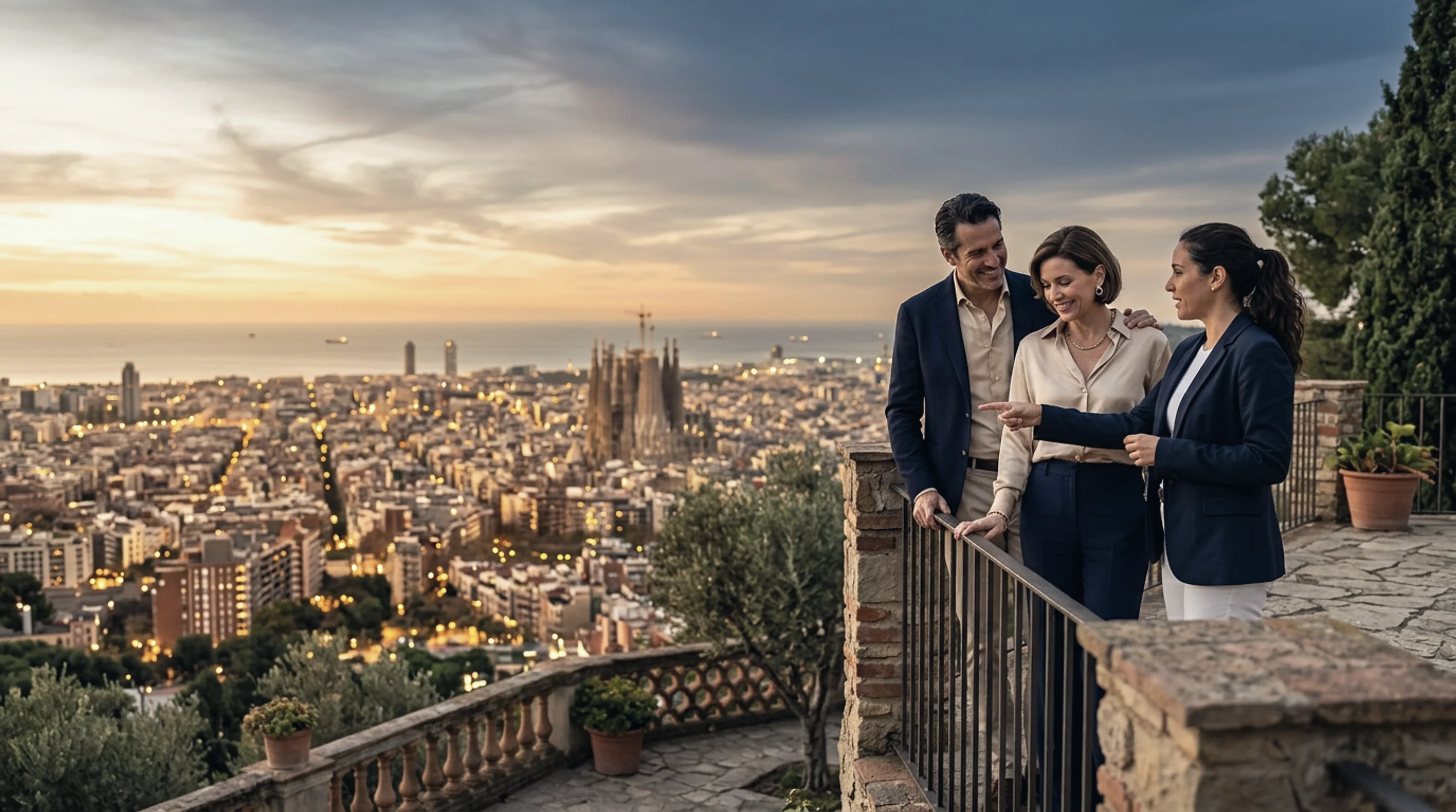
Map the route before you compare details
Location matters in Barcelona because neighborhoods have strong identities. The Gothic Quarter suits history, narrow streets, plazas, and old stone details. Montjuïc works well for gardens, viewpoints, and museum time. La Boqueria Market can add color and food context, but it is busy at many hours, so it should not be treated as a quiet browse. Park Güell sits on higher ground and involves walking, while Sagrada Familia and Casa Batlló draw steady attention and benefit from careful timing.
Look at the route as a whole. Are the stops clustered, or does the day cross the city repeatedly? A route that jumps from one district to another may sound rich but spend too much time in transit. A better plan often groups nearby places and uses one clear change of area. Ask how arrival and departure points work, and whether the start is easy to reach from your accommodation.
Pay attention to walking distance and terrain. Barcelona has smooth boulevards and sloping streets, plus cobblestones and uneven paving in older areas. If the day includes Park Güell or Montjuïc, check whether the plan accounts for uphill sections and where breaks happen. A route is not truly relaxed if it contains several steep stretches with no pause.
Check what is included, and what is left open
Once the broad route makes sense, compare what each option actually covers. This is where a polished description can hide practical gaps. Read the details for entry arrangements, time at each stop, transport between areas, and whether meals or tastings are part of the day. If a major site is named, check whether the itinerary allows enough time inside rather than only viewing it from outside.
Be careful with vague wording such as "explore the highlights" or "discover the city." Those phrases can be fine, but they do not tell you how the day will run. More useful wording explains how long the main stops take, what the focus is at each place, and how much freedom there is to linger. A tour centered on Museu Picasso, for instance, needs a different amount of time from a short exterior walk through the surrounding streets.
There is also a trade-off between structure and spontaneity. A tightly planned day can be efficient, especially for first-time visitors who want context. A looser plan leaves more room for a café stop, a shop, or a street that catches your eye. Neither is automatically better. The right balance depends on whether you want the reassurance of a clear schedule or the freedom to change direction.
Some readers may come across privatetourinbarcelona.com while comparing options, and the name alone is not enough to decide fit. Use it as one reference point, then judge any proposed route against your own priorities, timing, and comfort level.
Ask practical questions before committing
Good questions reveal how well a tour has been thought through. Keep them direct and focused on the day itself. The aim is not to test anyone, but to understand what will happen from start to finish.
- How much walking is involved, and are there planned breaks?
- What happens if a site is closed, delayed, or unusually busy?
- Can the route be adjusted for children, mobility needs, or specific interests?
- How much time is spent at the main stops compared with travel between them?
- Are entry tickets, transport, or food part of the plan, or arranged separately?
Listen for answers that are specific without being rigid. A clear plan is helpful, but a sensible alternative for disruption is also useful. Barcelona can have busy periods, street changes, and days when a popular attraction feels crowded. A thoughtful plan has room to adapt without losing the point of the tour.
Also ask how the guide handles questions. A private format should allow more conversation than a group setting, but the style still varies. Some days work best as a flowing story about the city. Others suit a more conversational approach, with space for debate, photos, and quiet moments. If you care deeply about architecture, art, food, or local history, say so before the day rather than hoping it comes up by chance.
Match timing to the places you care about
Timing can change the feel of a Barcelona tour. Early hours often suit popular sites and market visits, while later hours can give a softer light for photography and a different pace in the streets. A route through the Gothic Quarter may feel very different in the morning compared with the evening. Montjuïc deserves enough time for viewpoints and walking, not just a brief pass.
Think about the order of stops as well as the hour. A day that starts with Sagrada Familia and continues through nearby architecture can be coherent, especially for design-focused visitors. A route that pairs La Boqueria Market with the Gothic Quarter and Barcelona Cathedral can work well for a first look at the old center. Park Güell may fit better with nearby areas or a longer architecture theme, depending on the overall pace.
Do not overfill the day with famous names. Two or three well chosen stops with context often leave a stronger impression than a rushed circuit. If a place matters deeply, give it room. If it is only on the list because it sounds familiar, consider replacing it with a district or viewpoint that better suits your interests.
Read the small print with a calm eye
Before booking, check the practical terms. Look at cancellation conditions, meeting details, duration, group size, and any requirements that affect the day. The aim is to avoid surprises, not to hunt for flaws. Clear terms are part of a professional arrangement and make it easier to plan around the tour.
If a plan includes entrance to major sites, confirm whether those arrangements are handled as part of the day or need separate action. If transport is used between areas, check whether it is included and how it fits the route. If food is mentioned, make sure it matches your dietary needs rather than assuming there will be a suitable option.
Accessibility deserves the same attention. Ask about steps, slopes, seating, and restroom breaks if these matter. Historic areas can be beautiful but awkward, and older buildings may have limits that are not obvious from a map. A route can still be enjoyable when these details are handled honestly from the start.
Compare value, not just the list of sights
Value in a private tour comes from fit. A short route that matches your interests can be more worthwhile than a long day packed with landmarks. Consider the clarity of the plan, the quality of the pacing, the amount of attention given to your questions, and how well the route respects the energy of the group.
When comparing options, return to the purpose you set at the beginning. Does the day give you the kind of introduction, depth, or flexibility you wanted? Are the main places connected in a way that makes sense? Does the plan leave space to absorb the city rather than simply tick it off? privatetourinbarcelona.com may be one name in the comparison, but the final choice should rest on the route and the experience described.
A good private tour in Barcelona should feel tailored without feeling improvised. It should know where to slow down, when to move on, and how to connect streets, buildings, and neighborhoods into a coherent day. Choose with that standard in mind, and the city becomes much easier to enjoy on your own terms.